
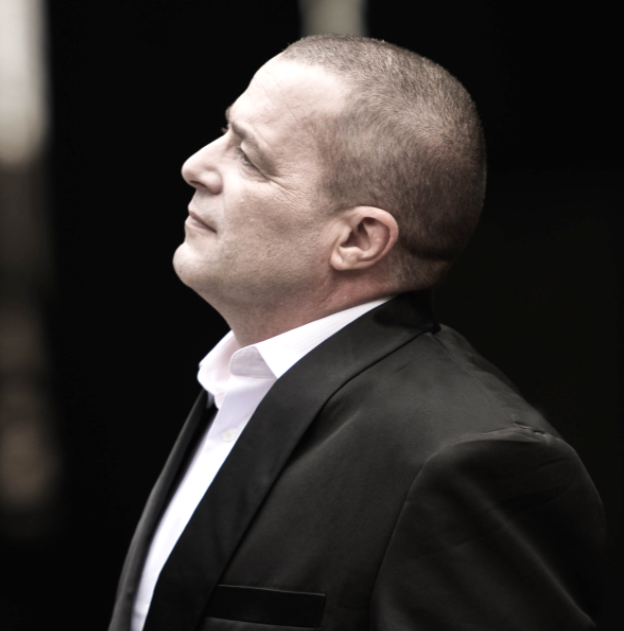
About TRC Quality & Me
Quality Is More Than Conformance
For decades, organizations have measured quality through defects, audits, warranty performance, customer complaints, process capability, and conformance to requirements. While these measures are important, they do not fully explain what quality is, nor do they fully explain how customers experience it.
One of the quality thinkers who most influenced my perspective is David Garvin. Garvin challenged the narrow view that quality could be defined through a single measure. He recognized that customers experience quality differently than engineers, manufacturing teams, suppliers, auditors, and business leaders. Quality is not simply conformance to specifications. It is performance, reliability, durability, serviceability, value, and ultimately the confidence customers place in a product, service, or organization.
Throughout my career, I found this perspective to be consistently true. A product can meet specifications and still disappoint the customer. A process can pass an audit and still be ineffective. A Quality Management System can be compliant and still fail to produce the results it was intended to achieve.
True quality is not the absence of defects.
True quality is the ability of an organization to consistently deliver products, services, and experiences that meet customer expectations while continuously improving its ability to do so.
Quality Begins With The Customer
II believe quality begins with understanding what the customer values and building systems capable of consistently delivering it. Customer requirements should flow through every aspect of the organization, influencing product design, manufacturing processes, supplier management, risk analysis, corrective actions, leadership decisions, and continual improvement activities.
When customer expectations become disconnected from the systems intended to support them, quality begins to suffer. When those systems remain aligned, quality becomes sustainable.
For this reason, I believe every organization should begin with a clearly defined quality philosophy. A quality philosophy establishes what the organization believes about quality, the value it intends to create for its customers, and the principles that guide decision-making throughout the business.
That philosophy should shape the organization's quality vision, influence its policies and objectives, and provide direction for the systems, processes, and behaviors expected throughout the organization. Without it, quality often becomes a collection of procedures, audits, metrics, and corrective actions that exist without a clear purpose.
One of the concepts I appreciate most from David Garvin's work is the recognition that quality cannot be reduced to a single measure. Quality is not simply conformance to specifications. It is the organization's ability to consistently deliver performance, reliability, value, and confidence from the customer's perspective.
For this reason, I believe the strongest organizations view quality not as a compliance activity, but as a business philosophy that aligns leadership, employees, suppliers, processes, and continual improvement around a common purpose:
Consistently delivering value to the customer while continually improving the system that makes it possible.
Why TRC Exists
TRC was created to help organizations move beyond reactive problem-solving and transform quality into a strategic competitive advantage by building systems that consistently deliver quality, reliability, customer satisfaction, and long-term operational excellence.
Throughout my career, I repeatedly observed organizations investing significant resources addressing recurring defects, customer complaints, audit findings, supplier issues, warranty concerns, and operational disruptions while the underlying causes remained unchanged. Corrective actions were implemented. Containment activities were added. New procedures were written. Yet the same problems often returned because the conditions that created them had never truly been addressed.
The objective of TRC is not simply to solve today's problem.
The objective is to strengthen the system that produced it.
My View of Quality
Quality is often defined too narrowly.
Some define quality as conformance to specifications. Others measure quality through defects, PPM, warranty claims, audit findings, or process capability.
While these measures are important, they do not fully explain how customers experience quality. One of the quality thinkers who most influenced my perspective is David Garvin.
Garvin recognized that quality cannot be viewed through a single lens because customers, engineers, manufacturing teams, suppliers, service organizations, and business leaders all experience quality differently.
Quality is not simply conformance.
Quality is performance.
Quality is reliability.
Quality is serviceability.
Quality is durability.
Quality is customer confidence.
Quality is value.
Most importantly, quality is the organization's ability to consistently deliver what the customer expects.
A product can meet specifications and still disappoint the customer.
A product can pass inspection and still fail too soon.
A process can pass an audit and still be ineffective.
True quality requires understanding both the requirements and the customer's experience.
Quality Begins With The Customer
Every process, every procedure, every PFMEA, every Control Plan, every audit, every measurement system, and every corrective action exists for one reason:
To consistently meet customer expectations.
Customers do not experience quality through internal scorecards.
Customers experience:
Product performance
Reliability
Durability
Serviceability
Responsiveness
Consistency
The purpose of a Quality Management System is to translate customer expectations into products, services, processes, and controls that consistently deliver value.
When customer requirements, process controls, supplier controls, risk management activities, and continual improvement efforts become disconnected, quality suffers.
When they operate as an integrated system, quality becomes sustainable.
Quality Is A Business System
One of the most common misconceptions in manufacturing is that quality belongs to the Quality Department.
Quality belongs to the organization.
Quality impacts:
Customer satisfaction
Reliability
Warranty performance
Supplier effectiveness
Manufacturing efficiency
Cost of Poor Quality
Operational performance
Business competitiveness
Quality is created through the interaction of leadership, engineering, operations, suppliers, manufacturing processes, support functions, and continual improvement activities.
When these areas become disconnected, instability increases and performance declines.
Quality should not be viewed as a department.
Quality should be viewed as a business operating system.
Prevention Over Detection
One of the principles I believe most strongly is:
Prevention is always more effective than detection.
Inspection is important.
Containment is important.
Audits are important.
But none of these improve quality after a defect has already been created.
The most effective organizations focus on:
Understanding requirements
Managing risk
Reducing variation
Improving process capability
Strengthening controls
Eliminating root causes
Learning from failures
Detection protects the customer.
Prevention eliminates the risk.
The goal is not more inspection.
The goal is fewer problems that require inspection.
Process Stability, Variation, and Continuous Improvement
Quality problems rarely occur randomly.
They are often created by unmanaged variation.
Variation creates instability.
Instability creates risk.
Risk creates defects, delays, inefficiency, customer dissatisfaction, and unnecessary cost.
For this reason, I believe organizations must first understand process behavior before attempting to improve it.
Lasting improvement requires:
Reliable measurement systems
Understanding variation
Stable processes
Effective controls
Data-driven decision making
Continual learning
The objective is not simply to improve metrics.
The objective is to improve the system that produces them.
Knowledge Transfer, Not Consultant Dependence
I did not create TRC to become a permanent extension of a client's organization.
I created TRC to help organizations develop stronger internal capability.
The purpose of consulting should not be creating dependence.
The purpose of consulting should be building understanding.
Every engagement should leave the organization with:
Better problem-solving capability
Better decision making
Better process understanding
Better risk management
Better system effectiveness
Better operational discipline
The goal is not to retain the consultant.
The goal is to retain the learning.
About Me
I am John Branch, a retired global Quality Professional, business owner, and consultant with more than 30 years of manufacturing quality leadership experience supporting operations throughout the United States, China, Mexico, India, and Europe.
My experience spans automotive, industrial, food-grade, medical device, consumer product, and global manufacturing environments, including both high-volume and low-volume operations.
Throughout my career, I have held senior leadership and executive-level quality positions responsible for:
Quality Management Systems
Root Cause Analysis
Corrective Actions
Supplier Quality Management
Customer Quality
Process Stability
Product Launches & PPAP
Manufacturing Excellence
Statistical Analysis
Organizational Improvement
These experiences reinforced a simple lesson:
Most recurring problems are not caused by a lack of effort.
They are often the result of system weaknesses, unmanaged variation, ineffective controls, incomplete information, unclear responsibilities, or poorly understood risk.
The most effective organizations are not those that solve problems faster.
They are the organizations that learn how to prevent the problems from occurring again.
The TRC Commitment
TRC Quality Consulting is built on a simple commitment:
Understand the problem before recommending the solution.
Follow evidence rather than assumptions.
Focus on root causes rather than symptoms.
Strengthen systems rather than relying on temporary fixes.
Reduce variation.
Manage risk.
Protect the customer.
Transfer knowledge.
Create sustainable improvement.
Because quality excellence begins when organizations stop treating symptoms and start eliminating root causes.
Finding the True Root Cause. Creating Permanent Solutions.
Ready to discuss your quality challenges?
Let's start with understanding the system, identifying the root causes, and building a path toward sustainable improvement.
Begin Your Transformation
Submit the inquiry form to discuss your objectives and determine how a tailored consulting engagement can advance your strategic priorities.