
TRC Quality Consulting LLC.
Supplier Problems Shouldn't Become Your Quality Department's Job
When supplier problems keep coming back, the defect is often only the evidence. TRC helps manufacturers understand why the problem occurred, why it escaped, and what weaknesses in the supplier's system are allowing it to continue.
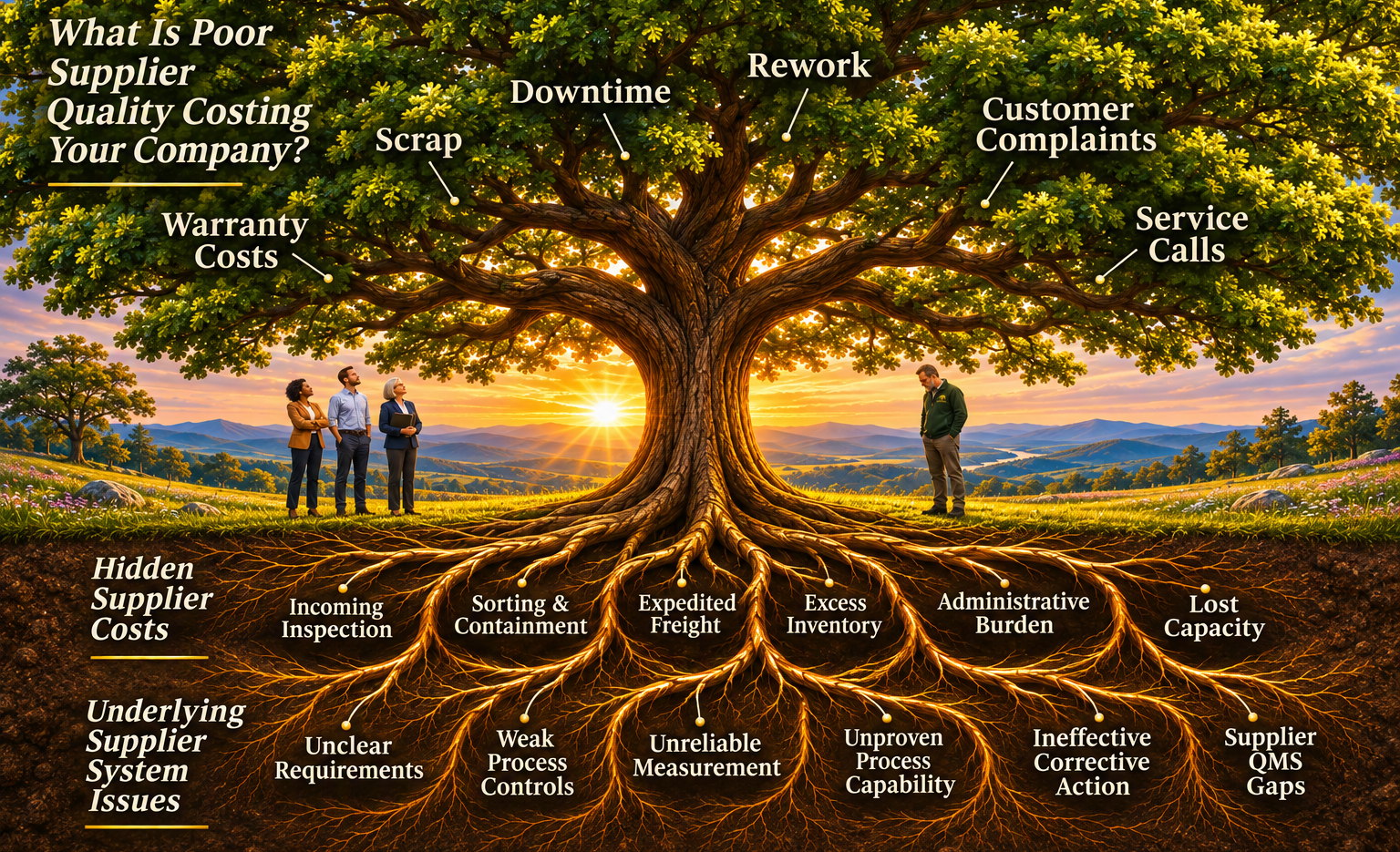
Are Supplier Problems Consuming Your Resources?
The supplier has the problem, but you're doing the work.
Your first priority is keeping production running. That means containing suspect material, arranging sorting, protecting the line, gathering evidence, and determining how much risk remains.
Meanwhile, your team may also be pushing the supplier to investigate, explain what changed, determine why the problem occurred and escaped, and develop an effective corrective action.
At that point, you are no longer just managing a supplier problem. You are helping operate the supplier's quality system.
That shouldn't be your team's job.
Supplier Capability Assessment
Understand the supplier's actual ability to consistently meet your requirements.
Root Cause Analysis & Corrective Action
Go beyond the defect to understand why it occurred, why it escaped, and what allowed those conditions to exist.
Quality Systems Assessment
Determine whether the management and quality systems are capable of preventing, detecting, and responding to problems.
Stop Managing Supplier Problems.
Start Changing the System Creating Them.
The first step is understanding why the supplier needs your organization to manage the problem in the first place. That means looking beyond the individual defect and examining the system behind it, the True Root Cause:
Are the PFMEA, Control Plan, work instructions, and actual production practices aligned?
Are process changes understood and controlled?
Are measurement and detection systems capable of finding the problems they are expected to detect?
Are corrective actions changing the system, or simply closing paperwork?
What conditions within the supplier's management system allowed the occurrence and escape causes to develop and persist?
Supplier Development Starts with Understanding
Supplier development should not make the customer better at managing supplier problems. It should make the supplier better at preventing and managing its own.
Customer detects → Customer contains → Customer investigates → Customer directs
becomes:
Supplier detects → Supplier contains → Supplier understands → Supplier corrects → Supplier prevents recurrence → Customer never sees the issue
When the supplier understands and controls the system creating the problem, the customer's burden begins to disappear. Supplier development means identifying the weaknesses in the supplier's management and manufacturing systems, establishing clear expectations, and helping the supplier develop the capability to own its processes and problems.
The Goal Is Supplier Ownership
A capable supplier should recognize when a process is changing, contain risk before it reaches the customer, determine why a problem occurred and escaped, correct the underlying system weaknesses, and provide evidence that the improvement is working.
Your organization should be verifying supplier performance, not operating the supplier's quality system for them.
That's the goal: a supplier capable of owning its processes, risks, problems, and improvement.