Insights
Deeper Thinking. Stronger Systems. Better Results.
Practical insights on True Root Cause, supplier quality, quality management systems, and manufacturing performance. Explore the evidence, processes, controls, and management-system conditions behind the results organizations experience.
Supplier Quality & Capability
Supplier performance is evidence of the systems and processes behind it. Explore supplier capability, recurring supplier problems, process controls, corrective action, supplier ownership, and the conditions required for sustainable improvement.
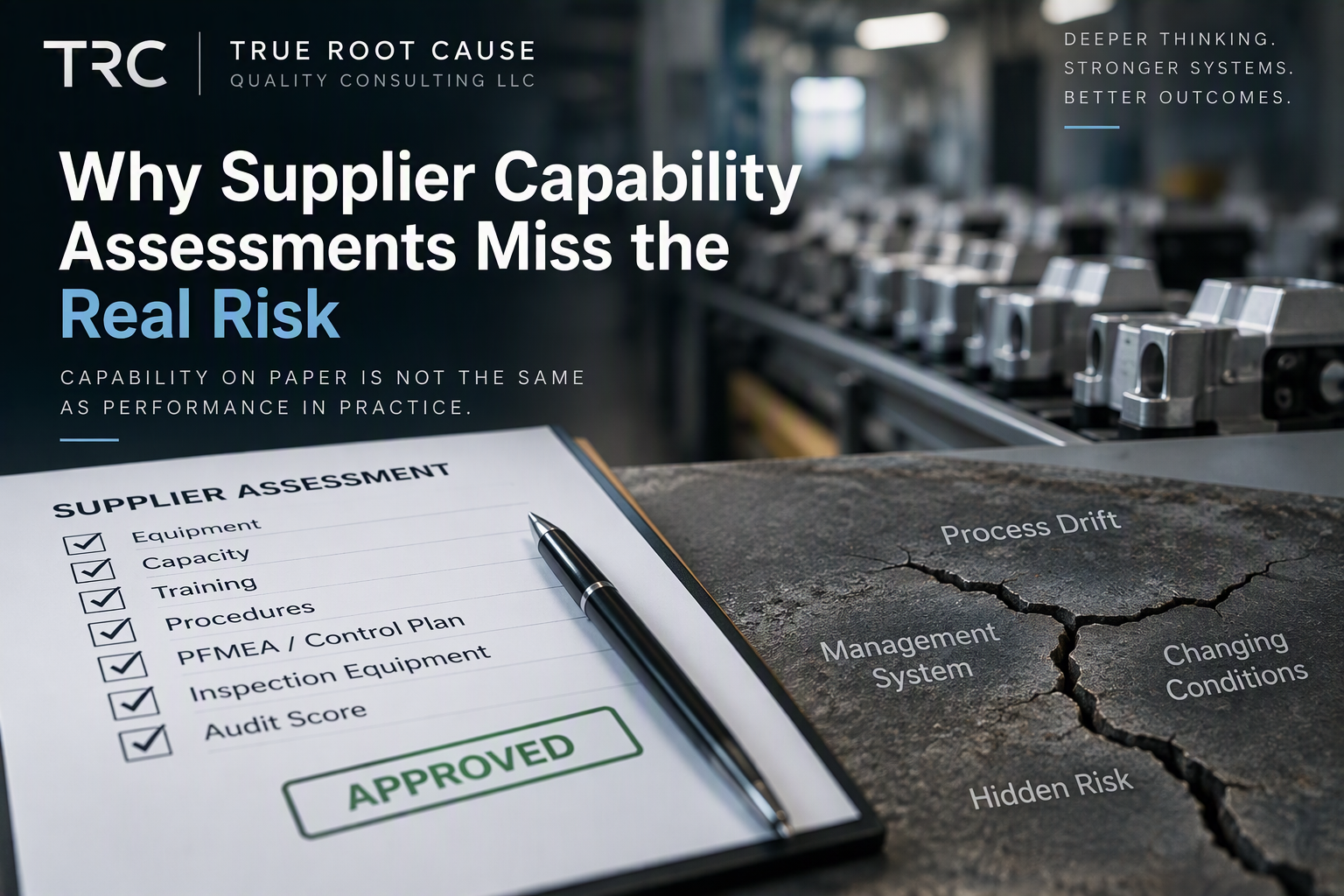
A supplier can pass every capability assessment and still struggle in production. The real risk may not be what the assessment finds, but what it fails to reveal about the management system behind the process.
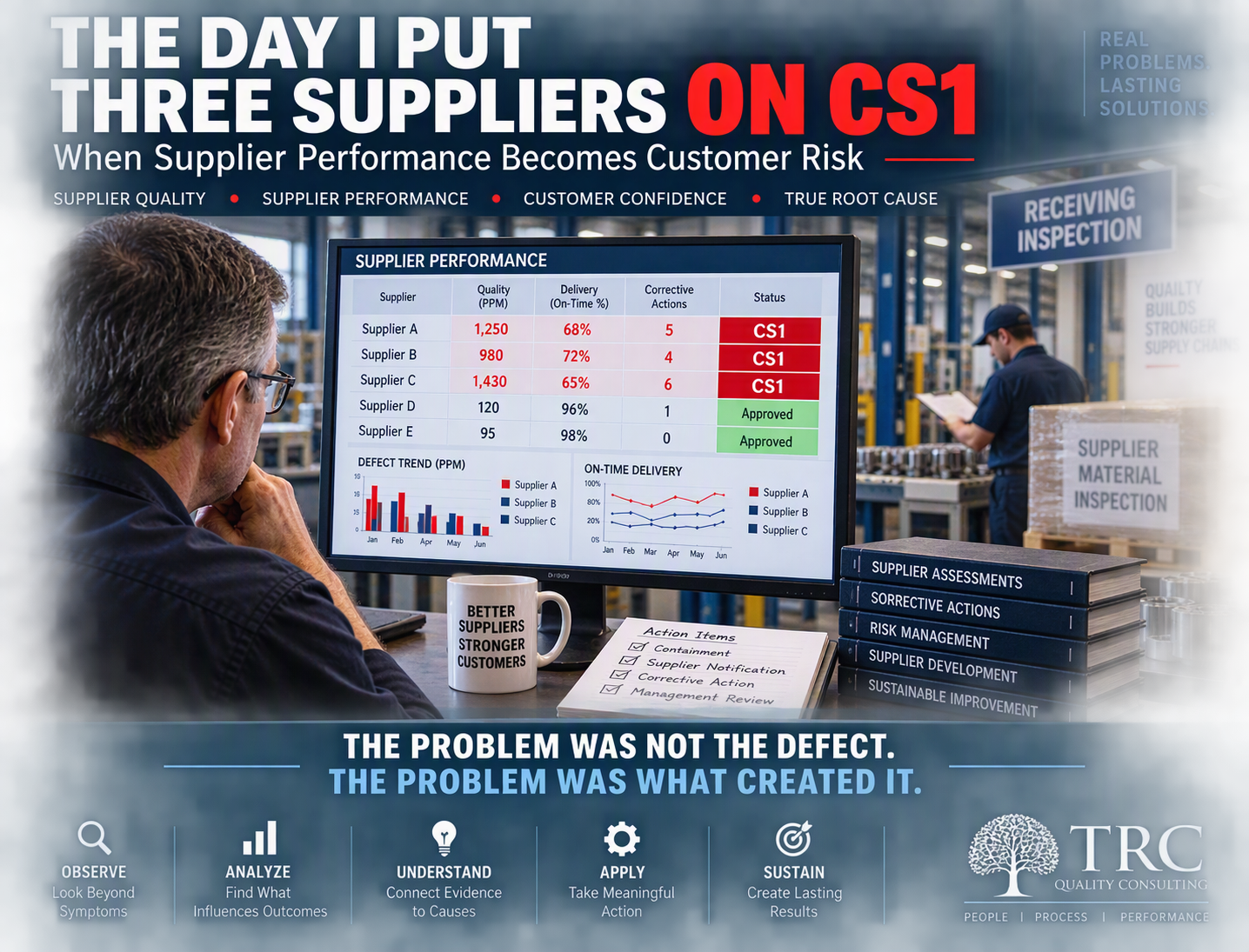
One of the toughest decisions of my quality career was placing three suppliers on Controlled Shipping Level 1. The experience taught me that recurring supplier problems are rarely about individual defects and almost always about underlying system weaknesses.
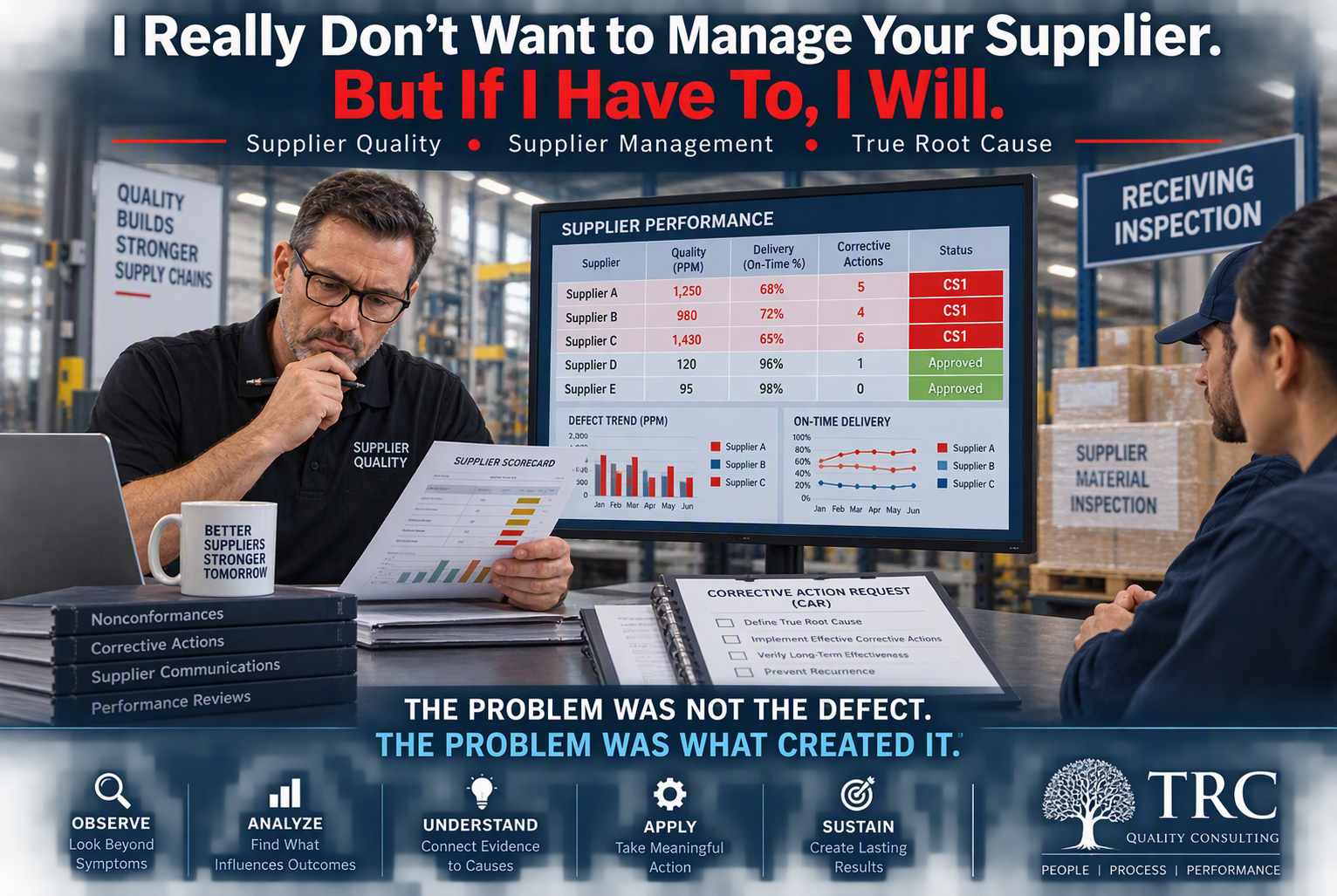
One of the clearest signs of supplier management failure is when the customer becomes responsible for driving the supplier's improvement efforts. Customers should not have to manage their supplier's quality management system, let alone their supplier's suppliers. When that happens, the issue is rarely the latest defect and is usually rooted in weaknesses within the supplier's management system.
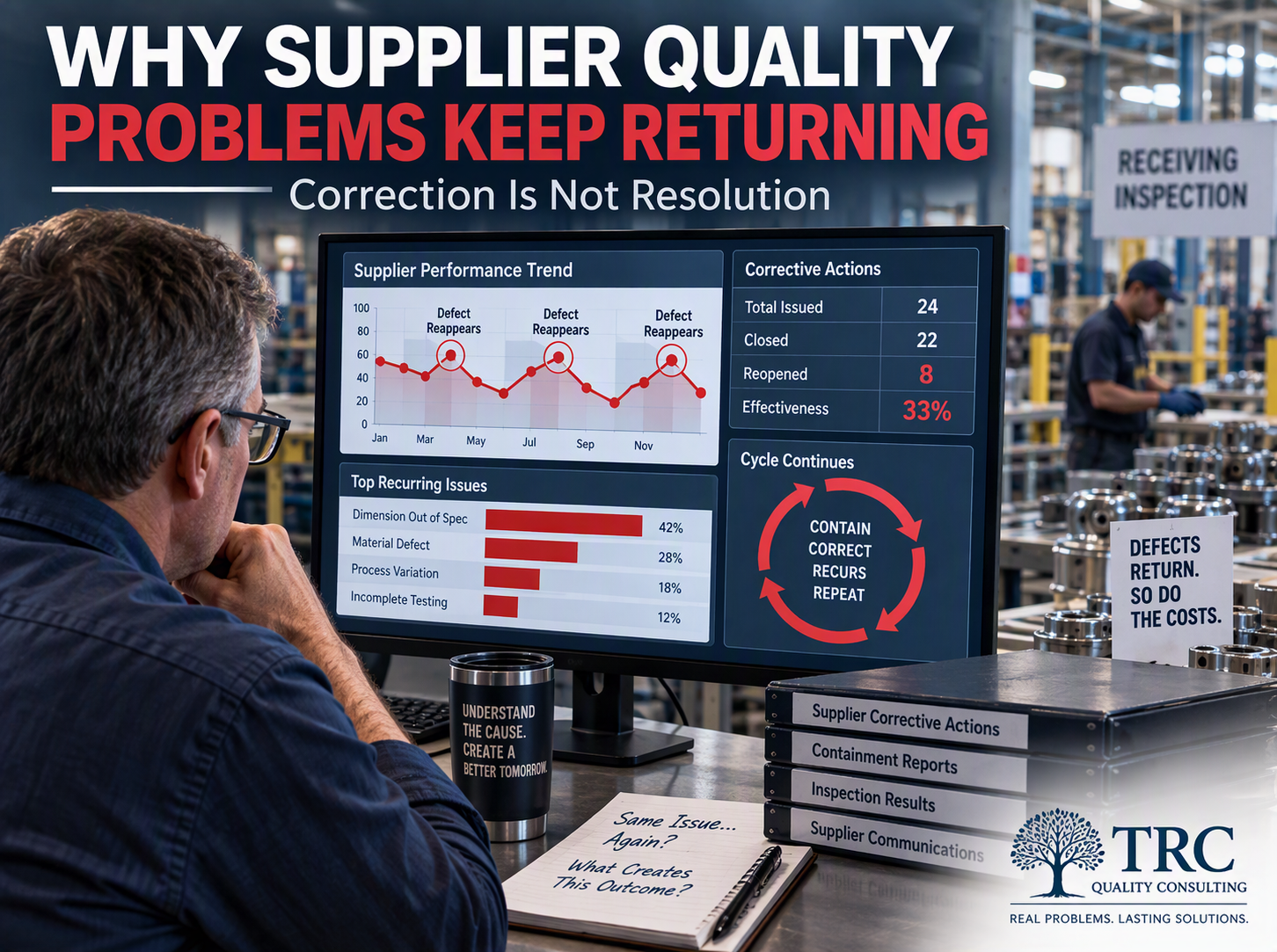
Supplier quality problems rarely repeat because organizations lack corrective actions. They repeat because organizations lack sufficient understanding of the conditions that created the outcome in the first place.
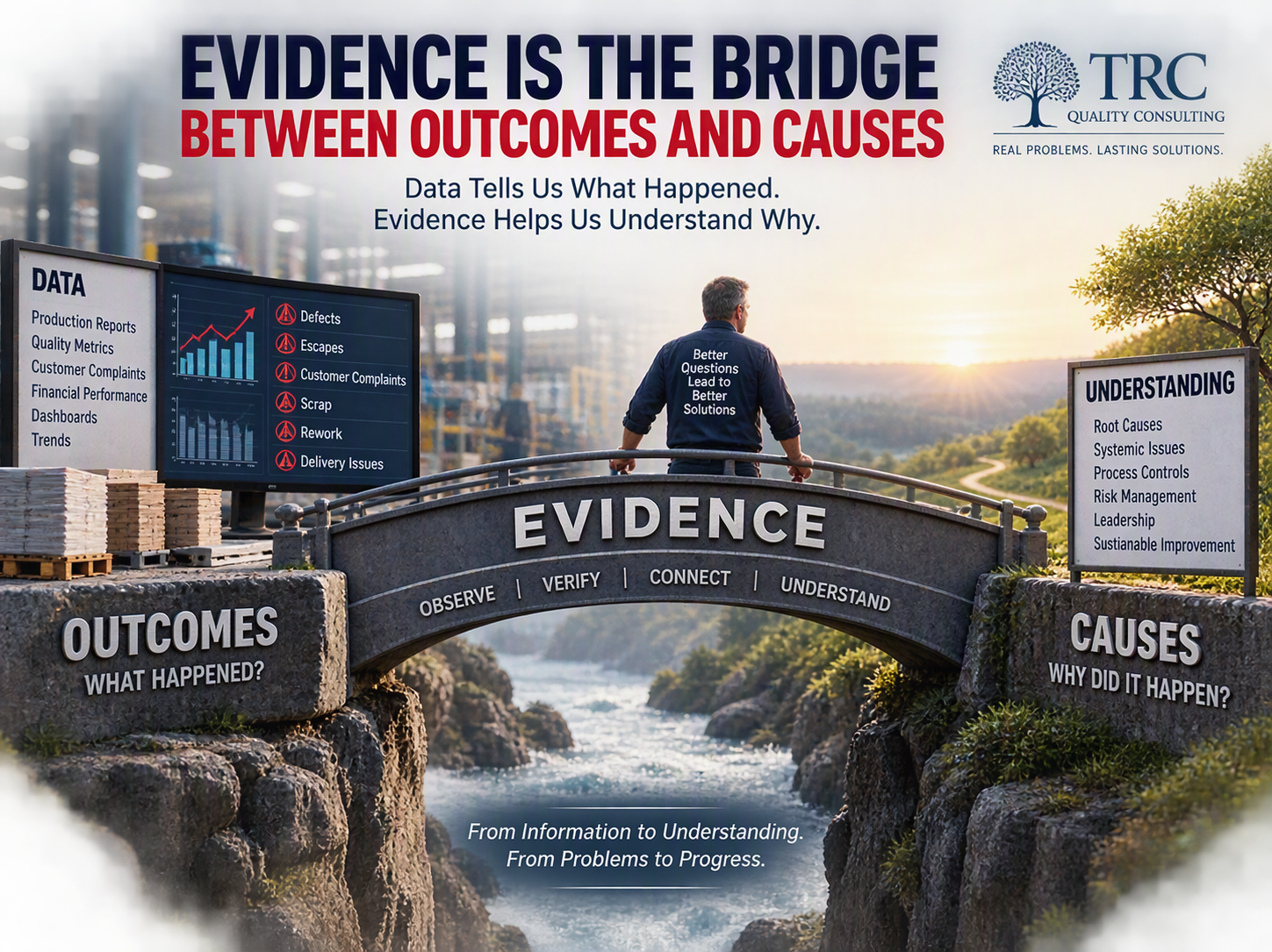
Data tells us what happened. Evidence helps us understand why it happened. Without evidence, organizations rely on assumptions. With evidence, organizations can connect outcomes to causes and develop meaningful understanding.
True Root Cause & Corrective Action
Look beyond the visible problem. Explore recurring defects, corrective action, evidence, occurrence and detection failures, and the system conditions that allow problems to persist.
Recurring manufacturing defects are evidence that something has not been fully understood or effectively controlled. Learn why problems return after corrective action and how occurrence causes, detection failures, process drift, and management-system weaknesses contribute to recurrence.
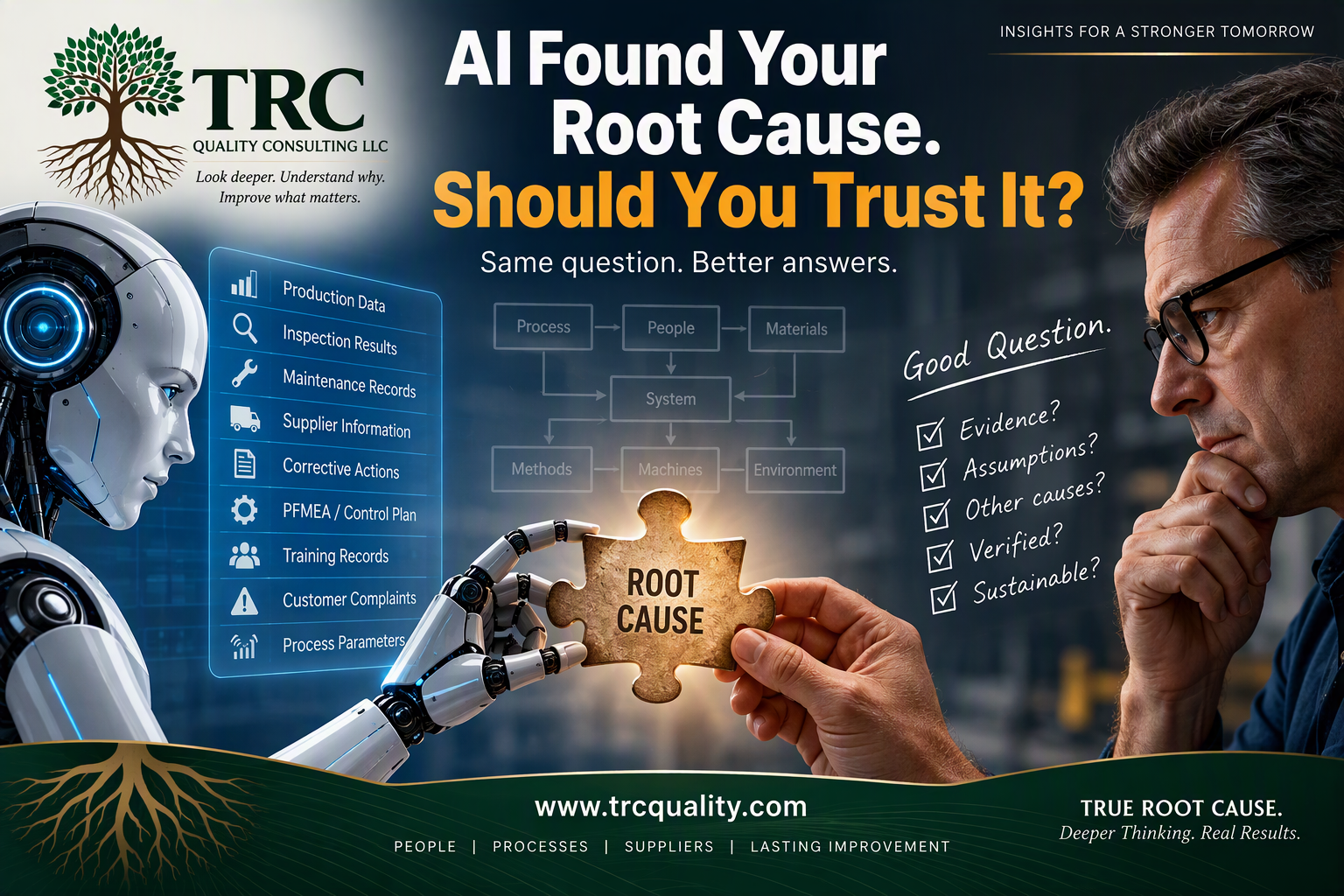
AI can analyze evidence, uncover relationships, and even identify root cause. But should you trust the answer? The real question is what makes any root cause conclusion trustworthy.
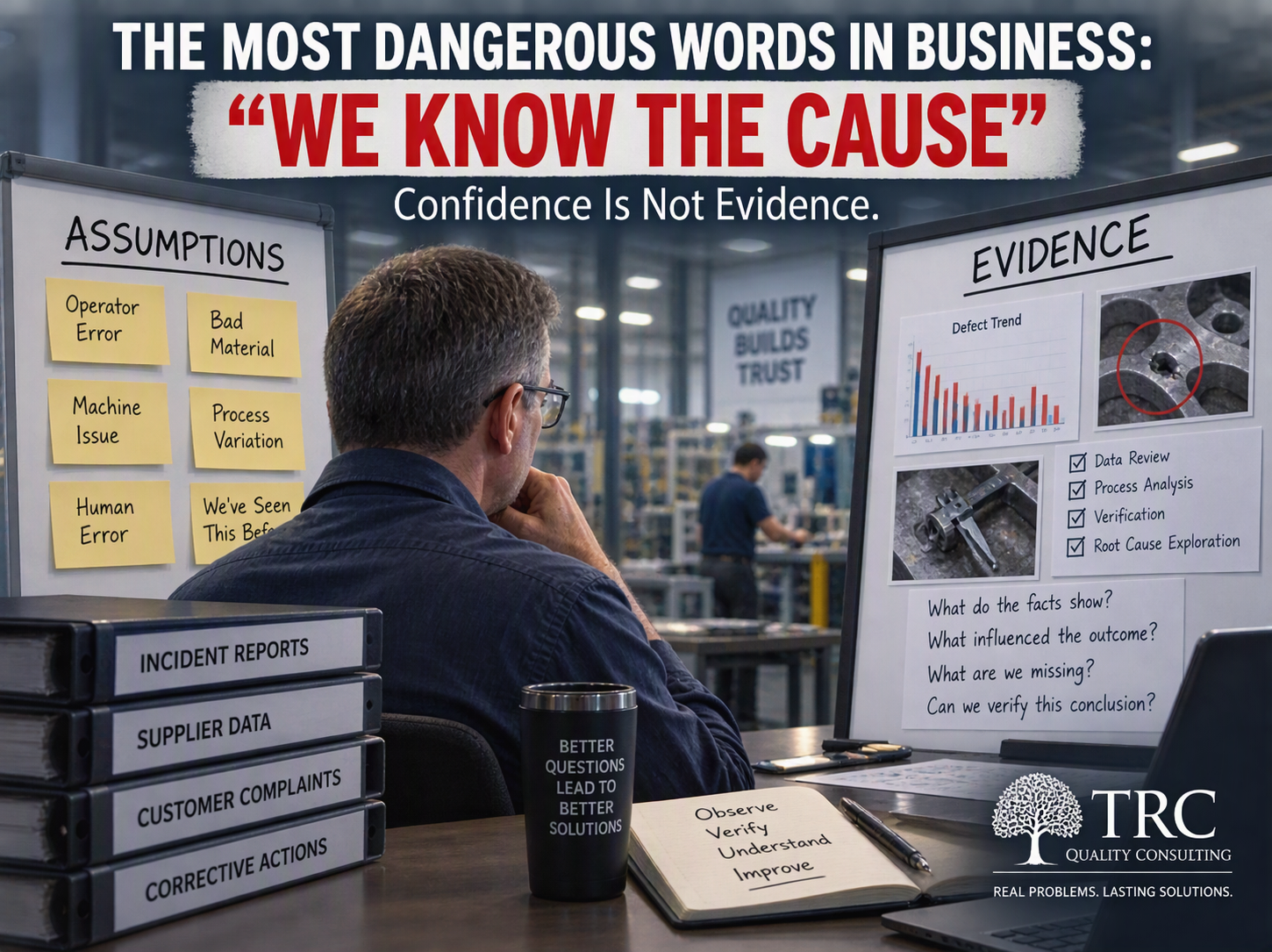
The most dangerous words in business may be, "We know the cause." Confidence is not evidence, and assumptions often disguise themselves as understanding.
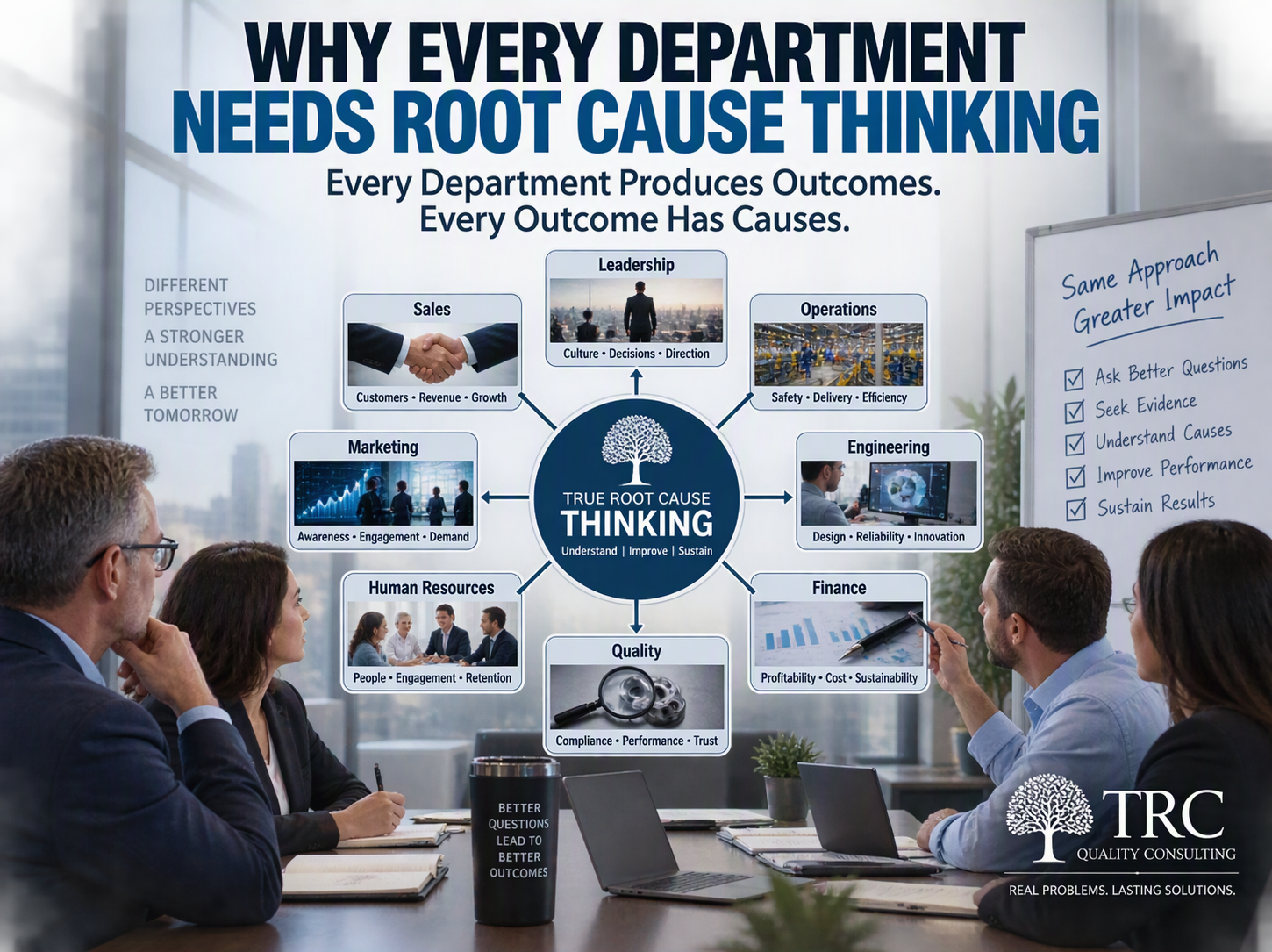
Every department produces outcomes. Every outcome has causes. That is why root cause thinking should not be limited to quality departments.
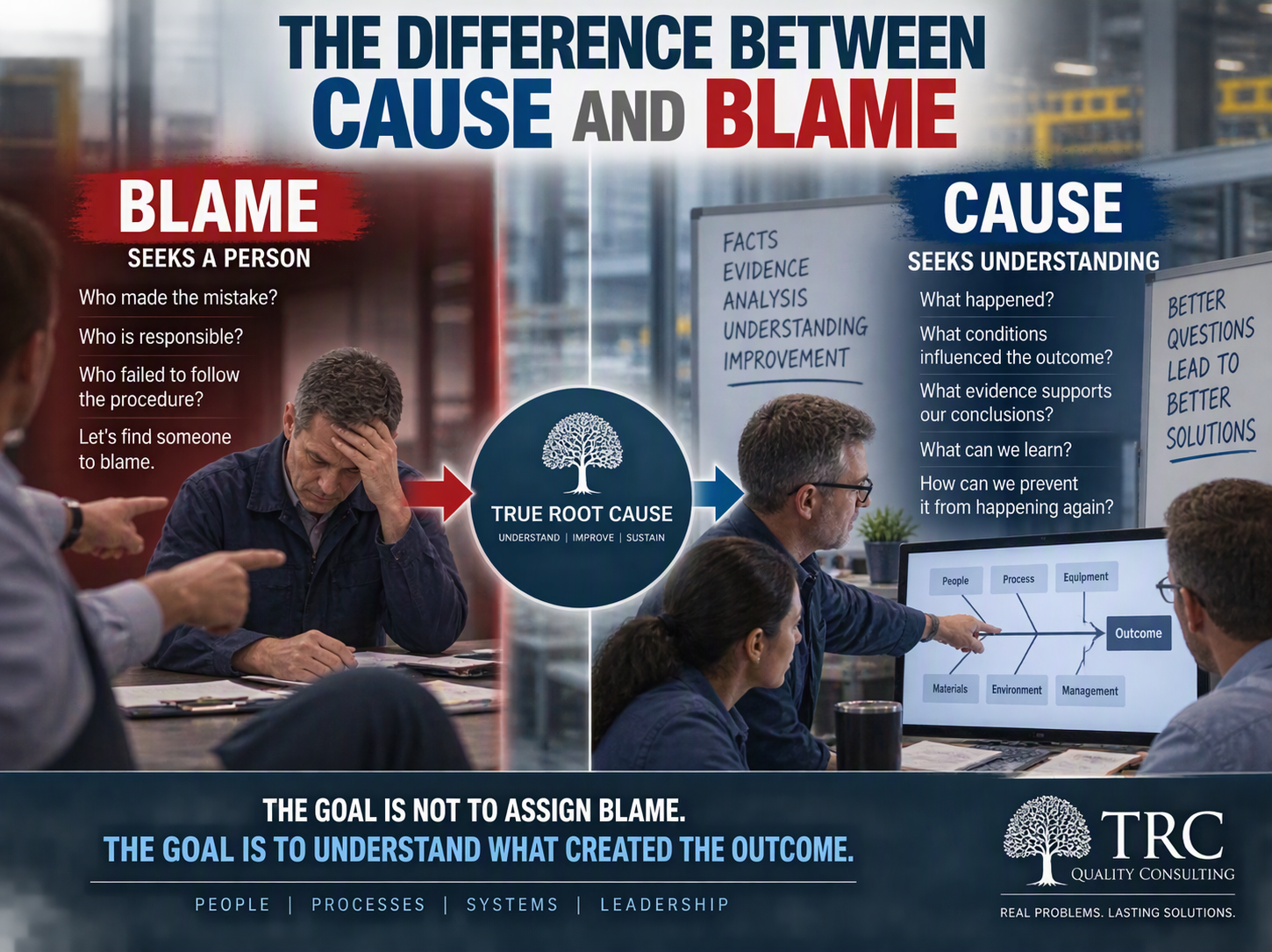
Blame asks who was involved. Root cause analysis asks what created the outcome. The difference fundamentally changes how organizations investigate, learn, and improve.
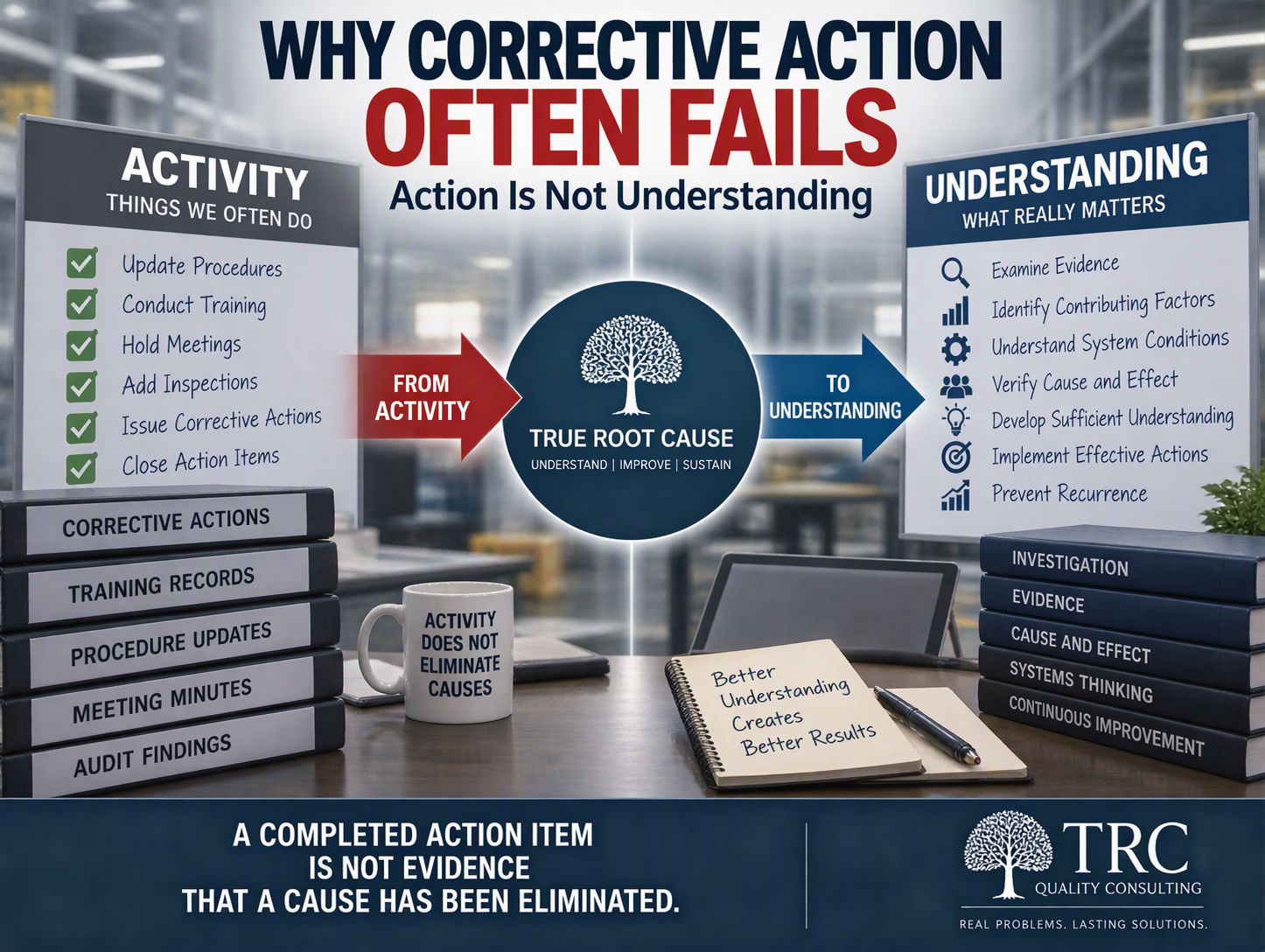
Corrective action cannot eliminate a cause that has not been adequately understood. Sustainable improvement begins with understanding, not activity.
Quality Systems
A quality system can meet documented requirements and still fail to support the results the organization needs. Explore quality-system effectiveness, process interaction, system drift, auditing, leadership, and the management conditions that determine how the system actually performs.
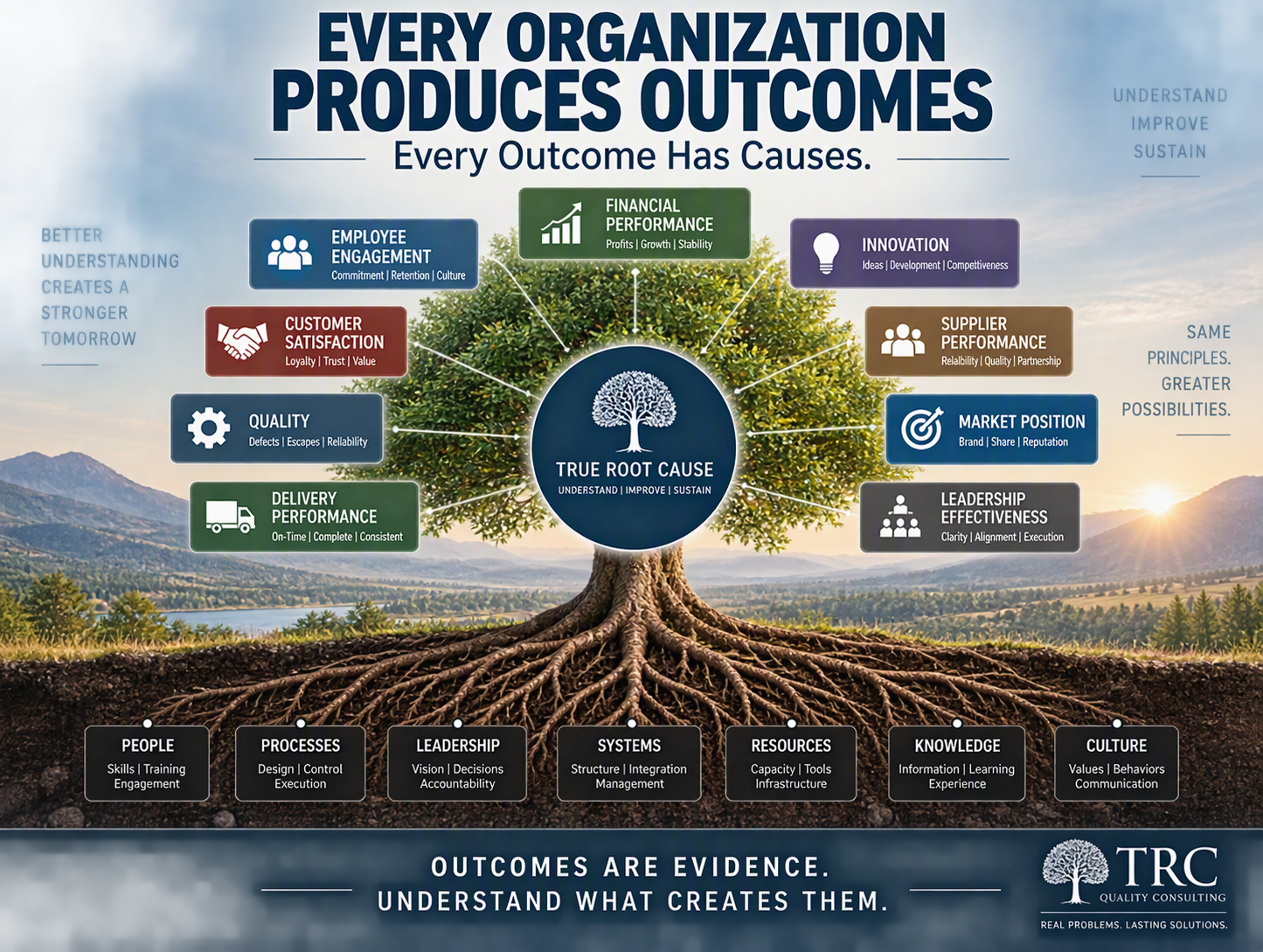
Every organization produces outcomes. Customers, employees, suppliers, leaders, and financial systems all generate results. Understanding what creates those outcomes is the foundation of True Root Cause thinking.