
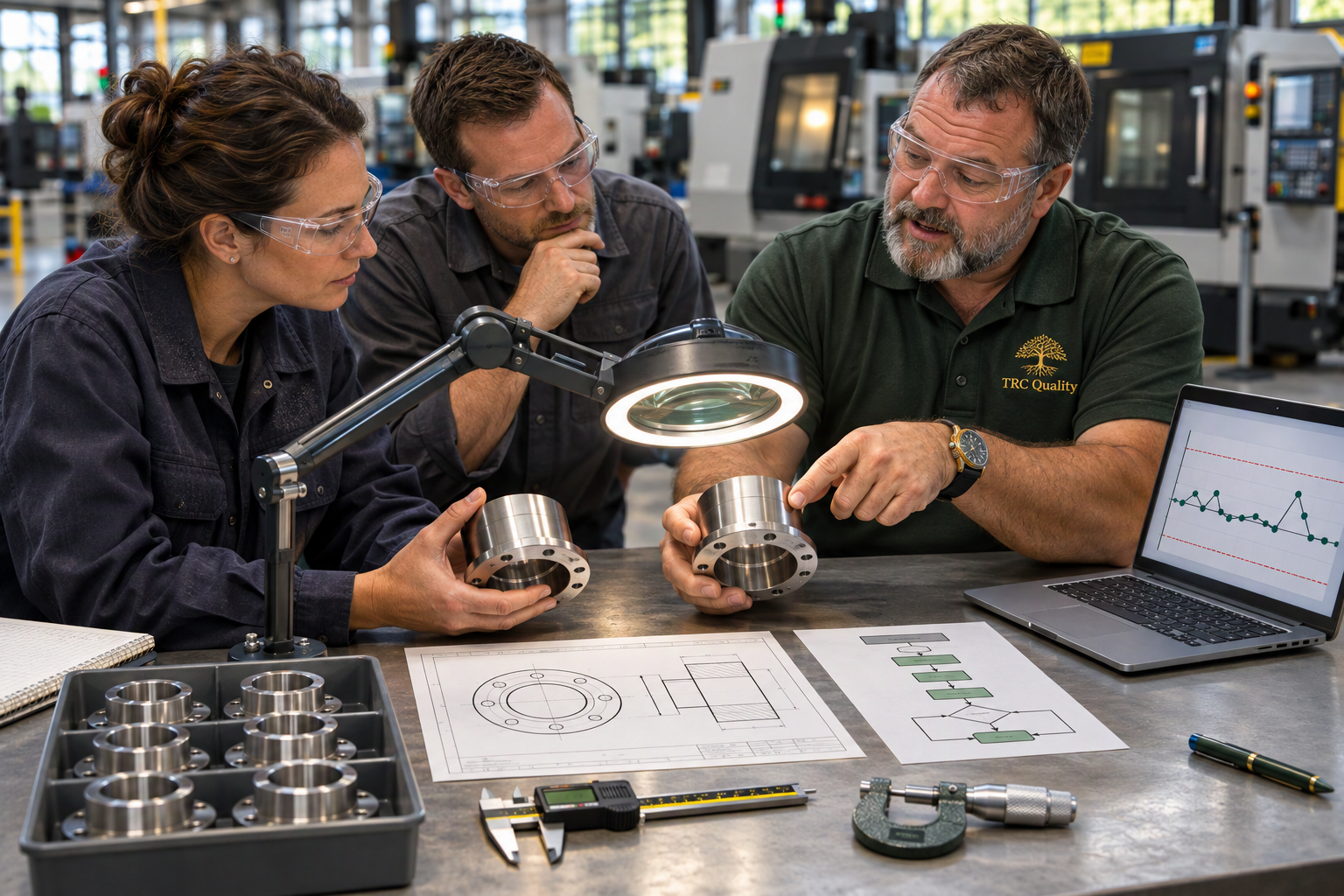
Why Do the Same Manufacturing Defects Keep Coming Back?
Recurring manufacturing defects are evidence that something has not been fully understood or effectively controlled. Learn why problems return after corrective action and how occurrence causes, detection failures, process drift, and management-system weaknesses contribute to recurrence.

AI Found Your Root Cause. Should You Trust It?
AI can analyze evidence, uncover relationships, and even identify root cause. But should you trust the answer? The real question is what makes any root cause conclusion trustworthy.

The Most Dangerous Words in Business: "We Know the Cause"
The most dangerous words in business may be, "We know the cause." Confidence is not evidence, and assumptions often disguise themselves as understanding.

Why Every Department Needs Root Cause Thinking
Every department produces outcomes. Every outcome has causes. That is why root cause thinking should not be limited to quality departments.

The Difference Between Cause and Blame
Blame asks who was involved. Root cause analysis asks what created the outcome. The difference fundamentally changes how organizations investigate, learn, and improve.

Why Corrective Action Often Fails
Corrective action cannot eliminate a cause that has not been adequately understood. Sustainable improvement begins with understanding, not activity.

Success Has Root Causes Too
Organizations often investigate failure while overlooking success. Yet successful outcomes are also evidence, and understanding what creates them is essential for preserving, replicating, and sustaining exceptional performance.

Root Cause Analysis Is Not About Problems
Root cause analysis is not fundamentally about solving problems. It is the disciplined pursuit of understanding what creates organizational outcomes.