
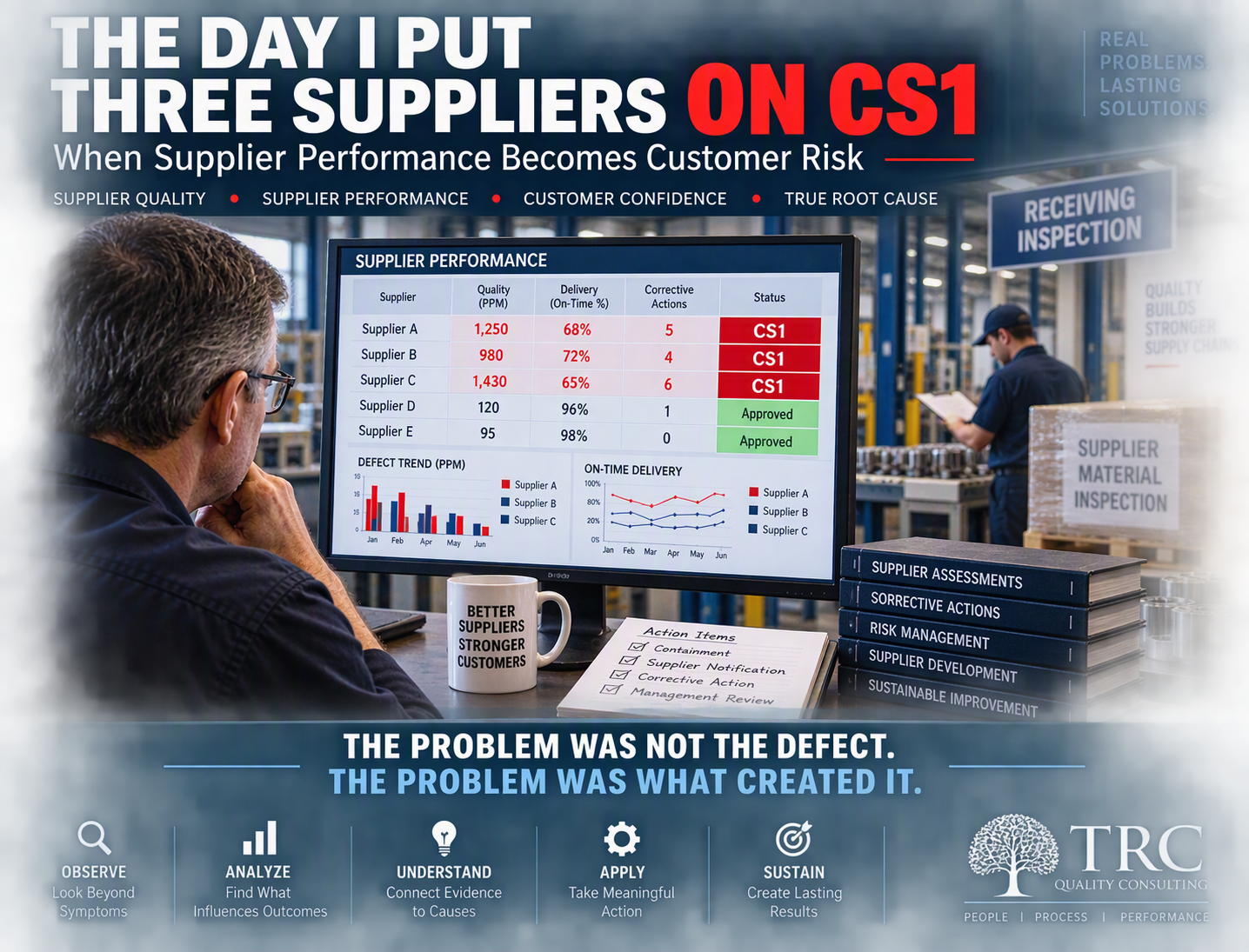
The Day I Put Three Suppliers on CS1
One of the toughest decisions of my quality career was placing three suppliers on Controlled Shipping Level 1. The experience taught me that recurring supplier problems are rarely about individual defects and almost always about underlying system weaknesses.
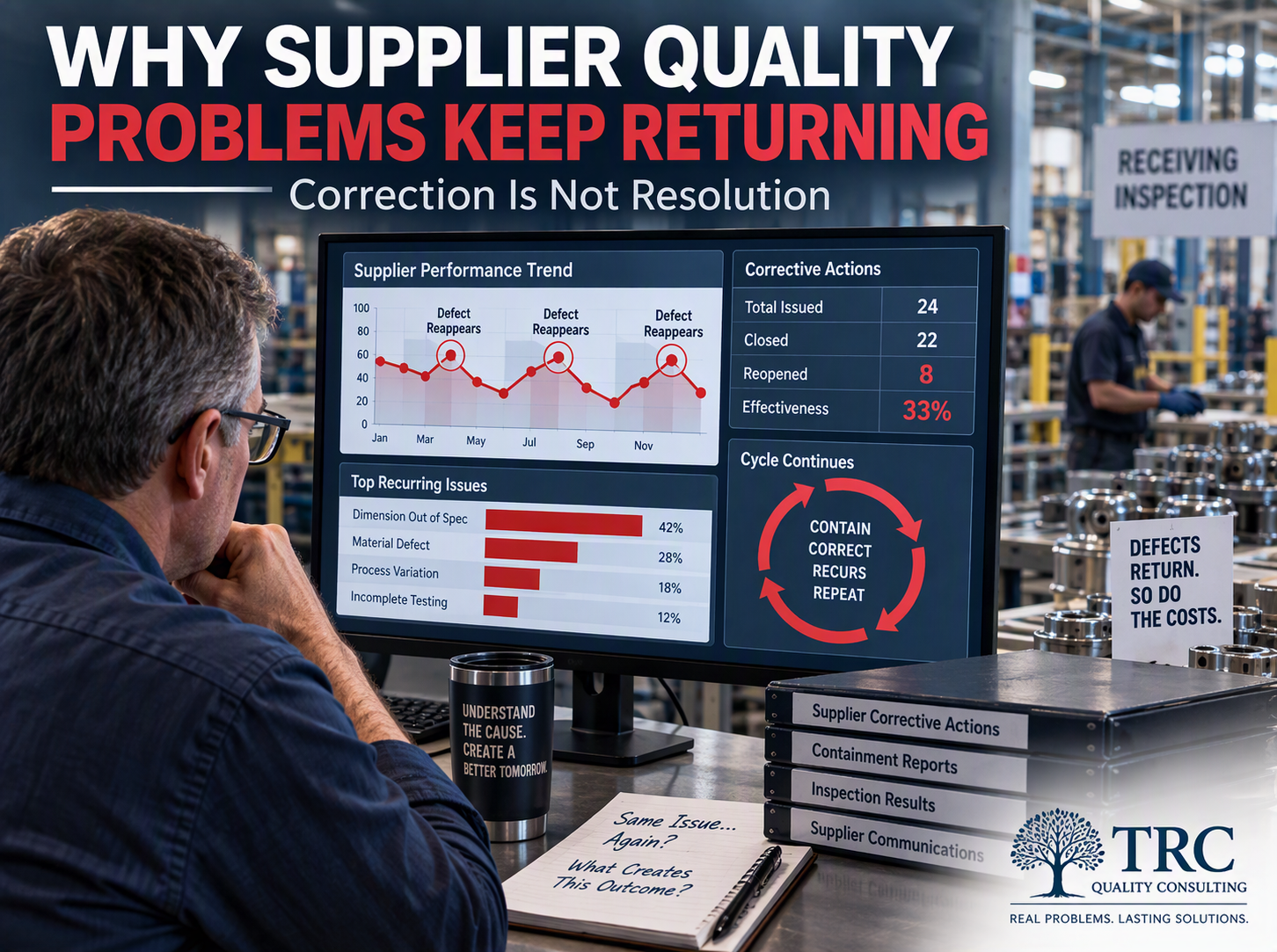
Why Supplier Quality Problems Keep Returning
Supplier quality problems rarely repeat because organizations lack corrective actions. They repeat because organizations lack sufficient understanding of the conditions that created the outcome in the first place.
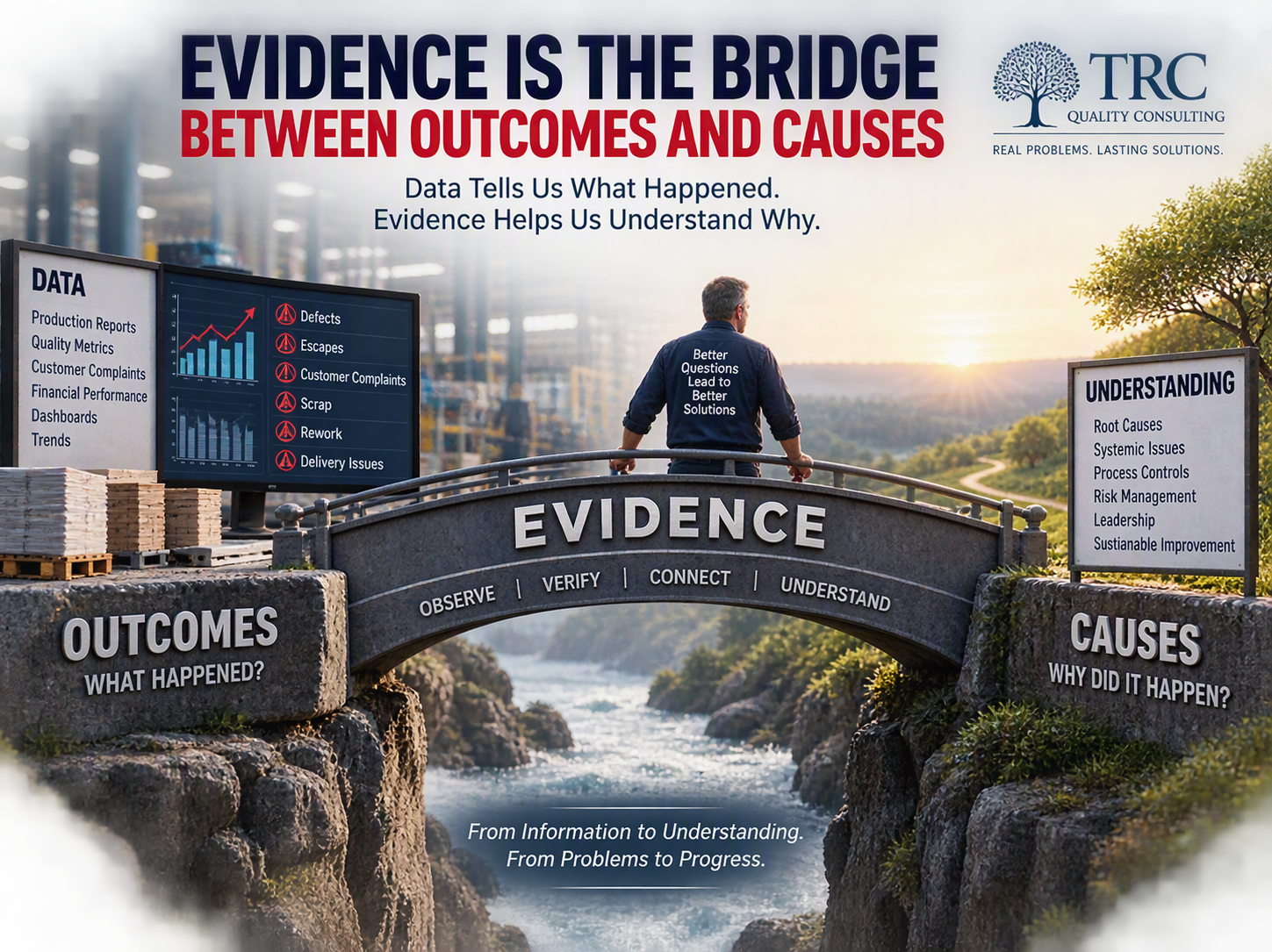
Evidence Is the Bridge Between Outcomes and Causes
Data tells us what happened. Evidence helps us understand why it happened. Without evidence, organizations rely on assumptions. With evidence, organizations can connect outcomes to causes and develop meaningful understanding.
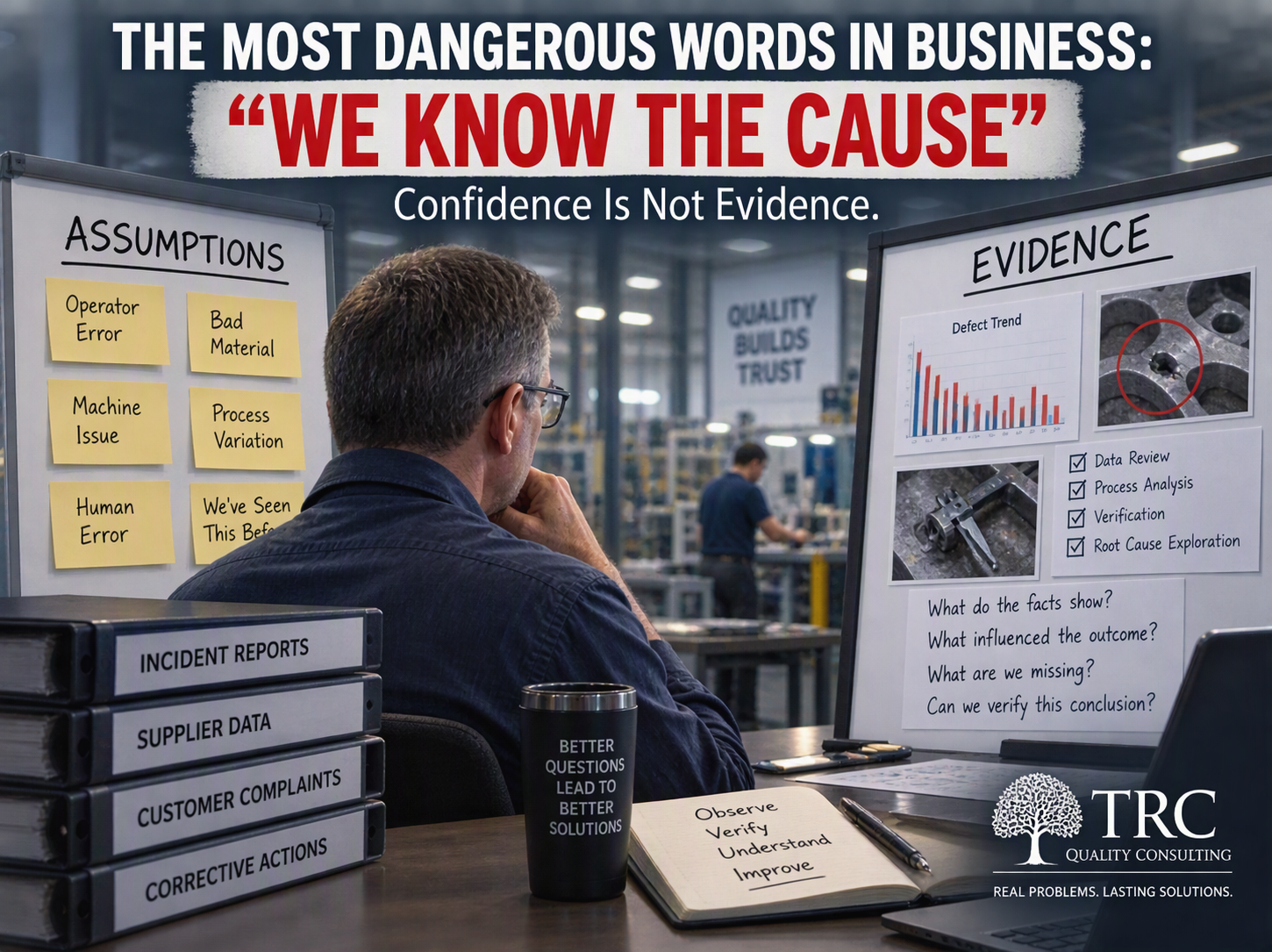
The Most Dangerous Words in Business: "We Know the Cause"
The most dangerous words in business may be, "We know the cause." Confidence is not evidence, and assumptions often disguise themselves as understanding.
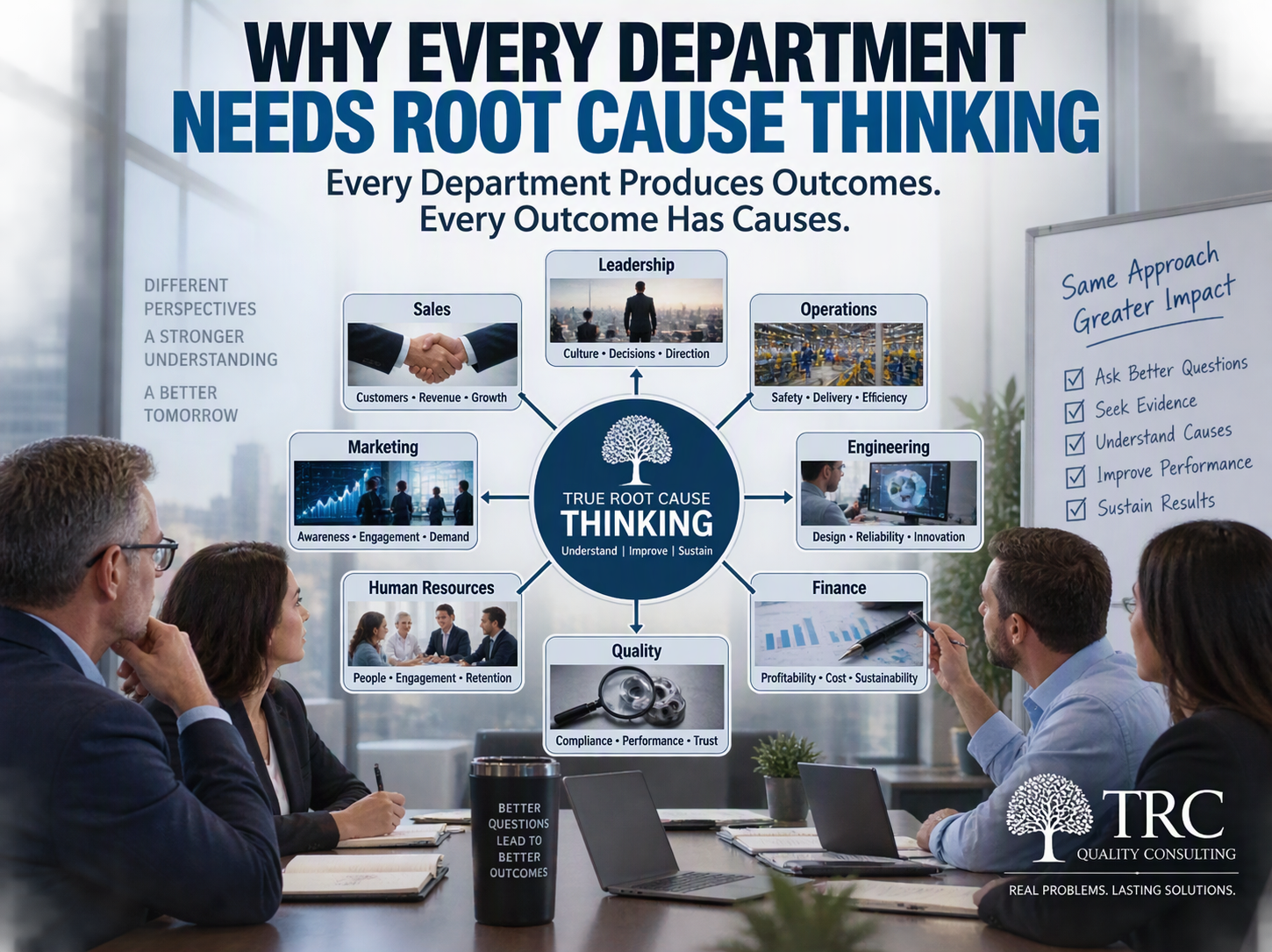
Why Every Department Needs Root Cause Thinking
Every department produces outcomes. Every outcome has causes. That is why root cause thinking should not be limited to quality departments.
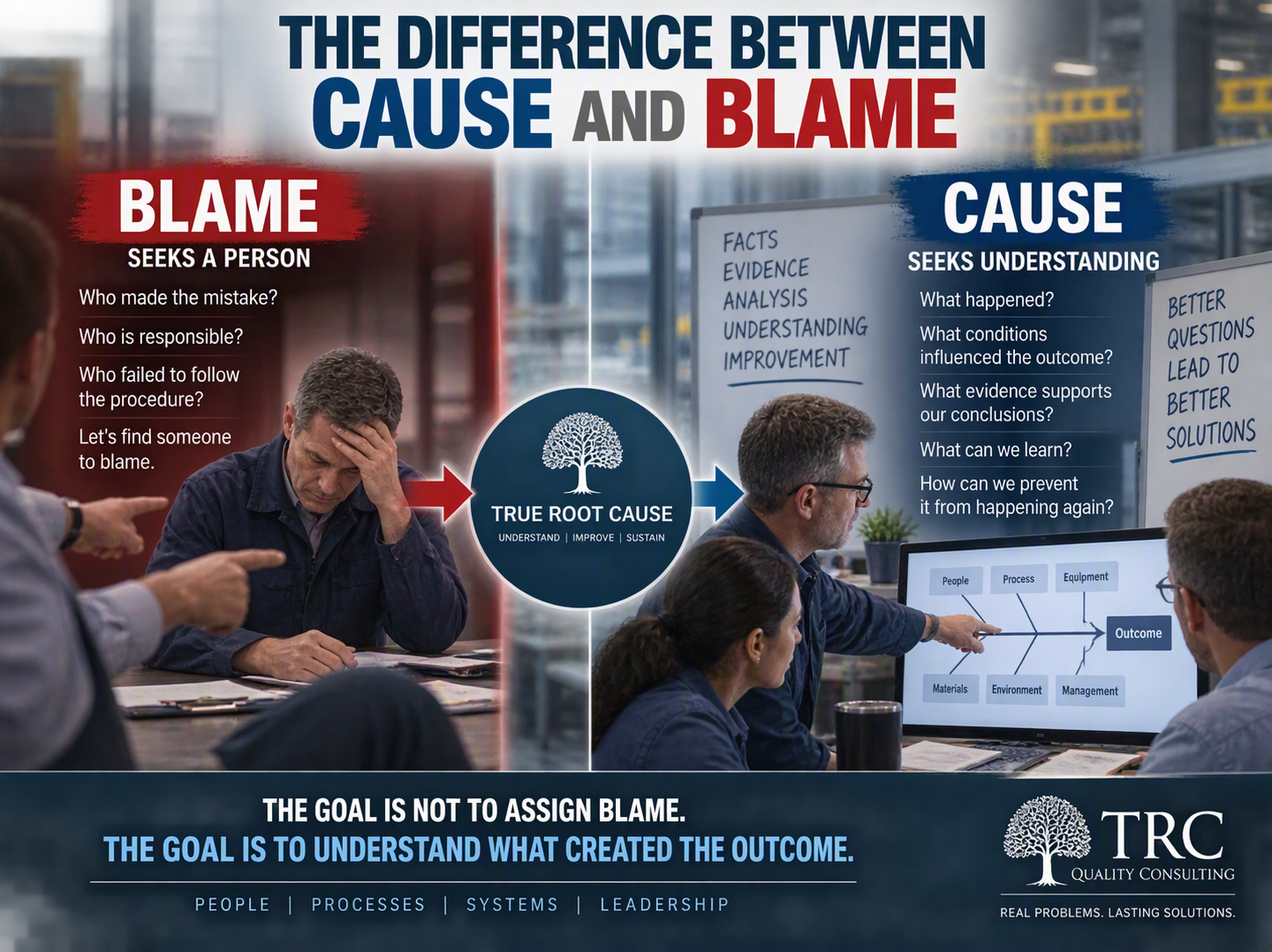
The Difference Between Cause and Blame
Blame asks who was involved. Root cause analysis asks what created the outcome. The difference fundamentally changes how organizations investigate, learn, and improve.
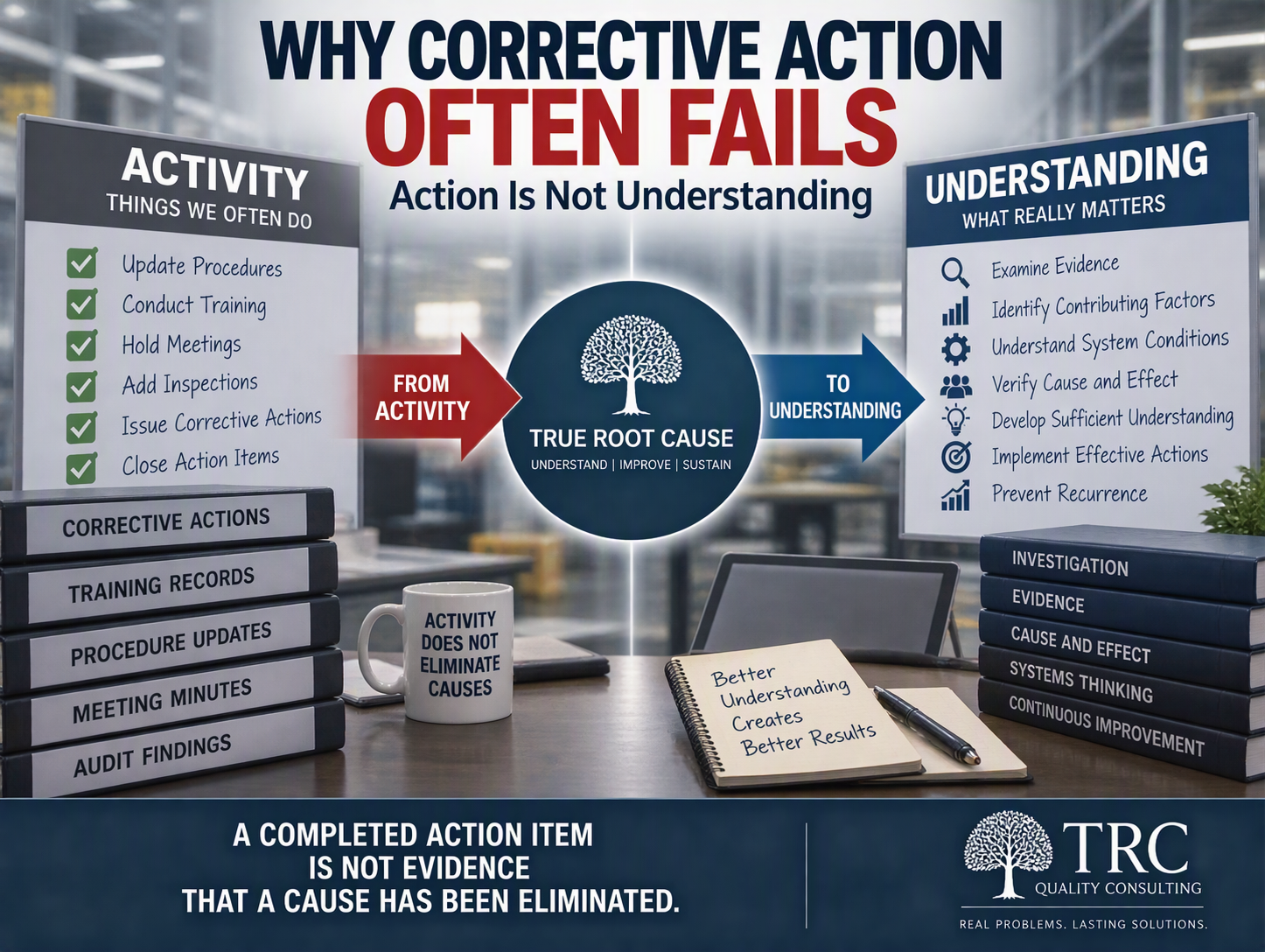
Why Corrective Action Often Fails
Corrective action cannot eliminate a cause that has not been adequately understood. Sustainable improvement begins with understanding, not activity.
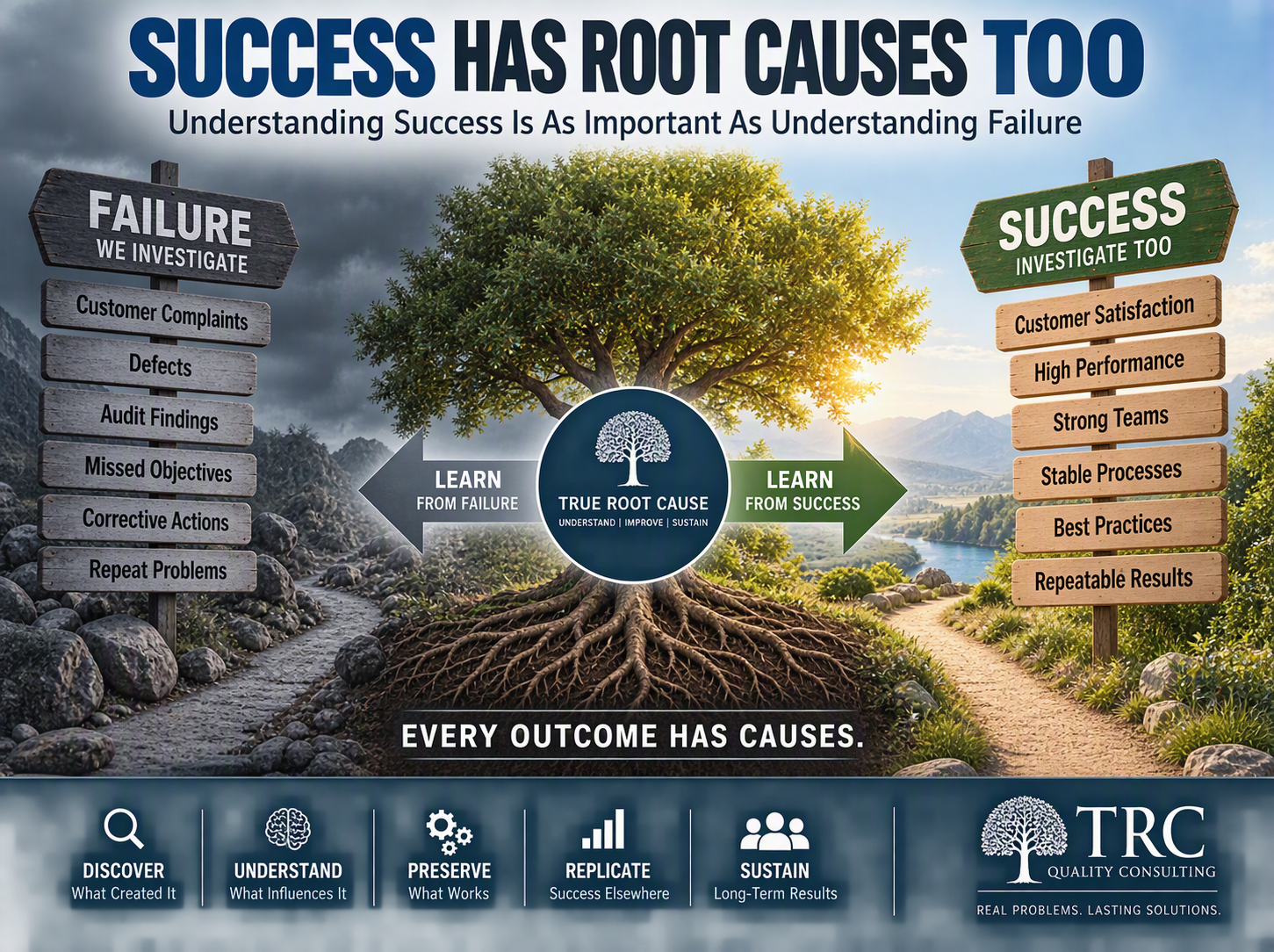
Success Has Root Causes Too
Organizations often investigate failure while overlooking success. Yet successful outcomes are also evidence, and understanding what creates them is essential for preserving, replicating, and sustaining exceptional performance.
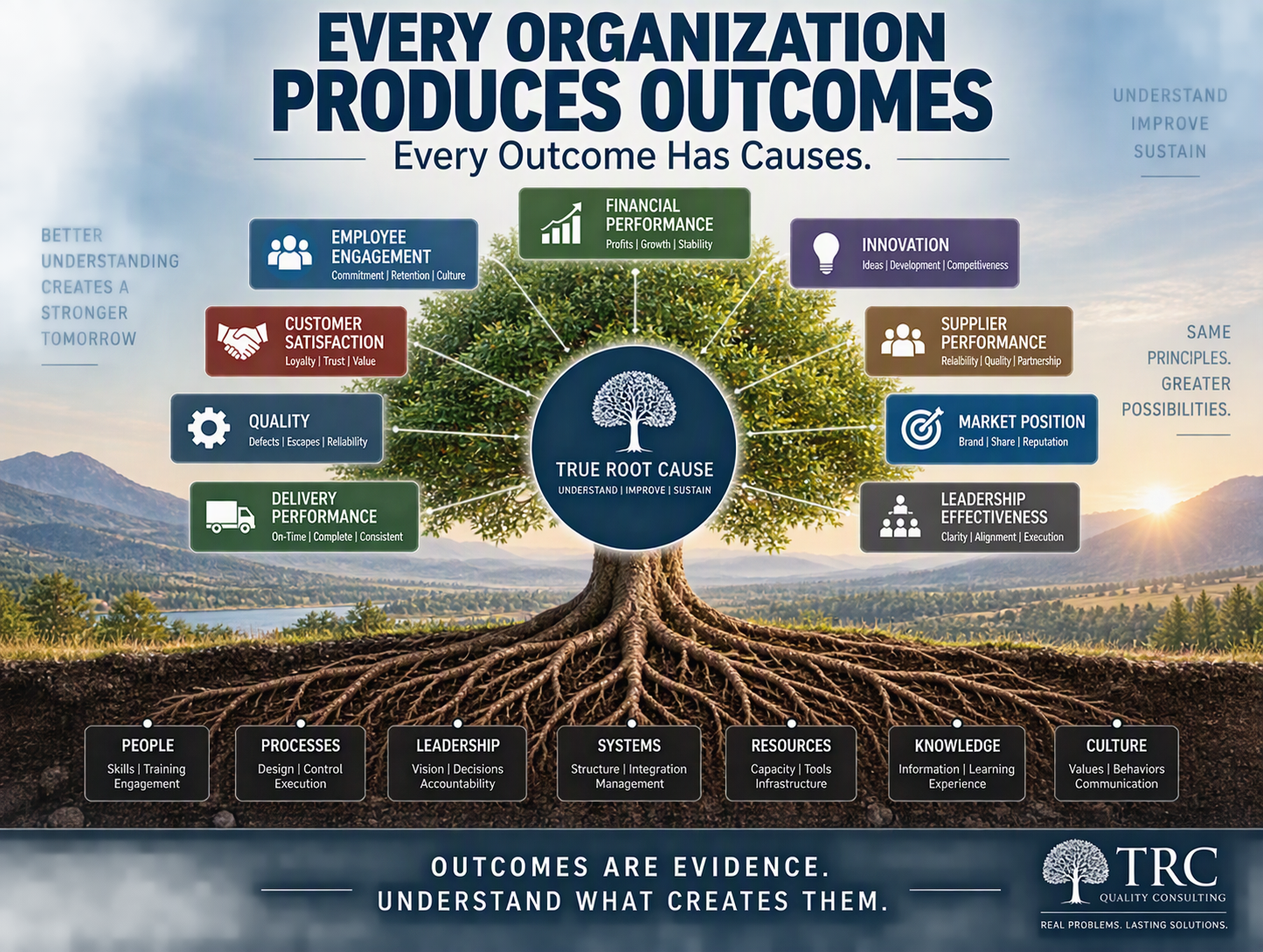
Every Organization Produces Outcomes
Every organization produces outcomes. Customers, employees, suppliers, leaders, and financial systems all generate results. Understanding what creates those outcomes is the foundation of True Root Cause thinking.
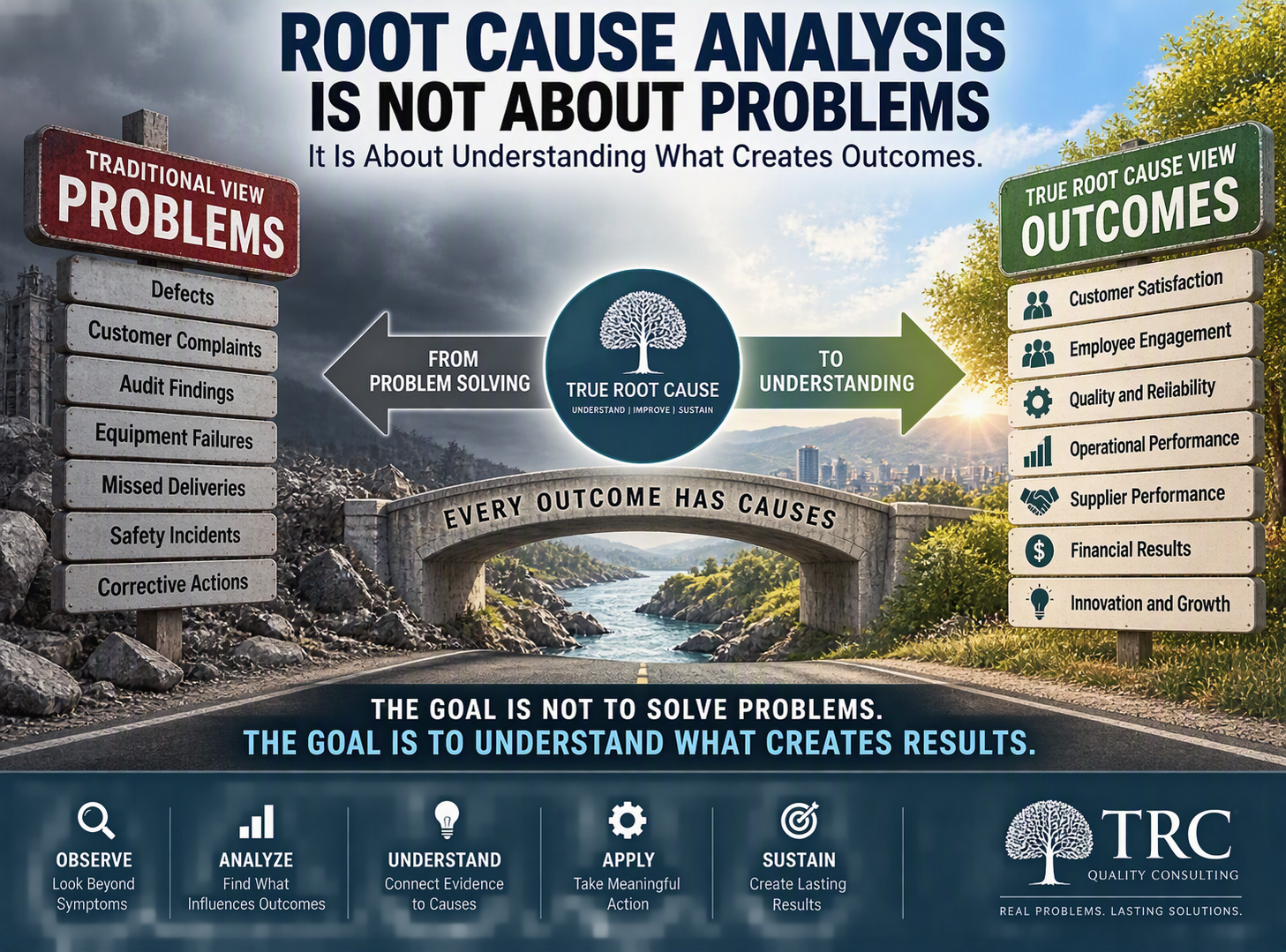
Root Cause Analysis Is Not About Problems
Root cause analysis is not fundamentally about solving problems. It is the disciplined pursuit of understanding what creates organizational outcomes.